
Cooked dog food might sound simple at first: fresh ingredients, gently heated, ready for the bowl. For many dog owners, freshly cooked dog food seems closer to real nutrition than dry food or canned food. And indeed, several studies show that cooked dog food can offer benefits in terms of digestibility, stool volume, and gut flora.
But: Cooked dog food is not automatically healthy or nutritionally complete. What matters is which ingredients are used, how gently they are processed, and whether the meal contains all the nutrients your dog needs every day.
In this guide, we break down what studies on cooked dog food really show, which benefits are well supported by science, and what matters for a nutritionally complete recipe.
Jump to section
What does cooked dog food even mean?
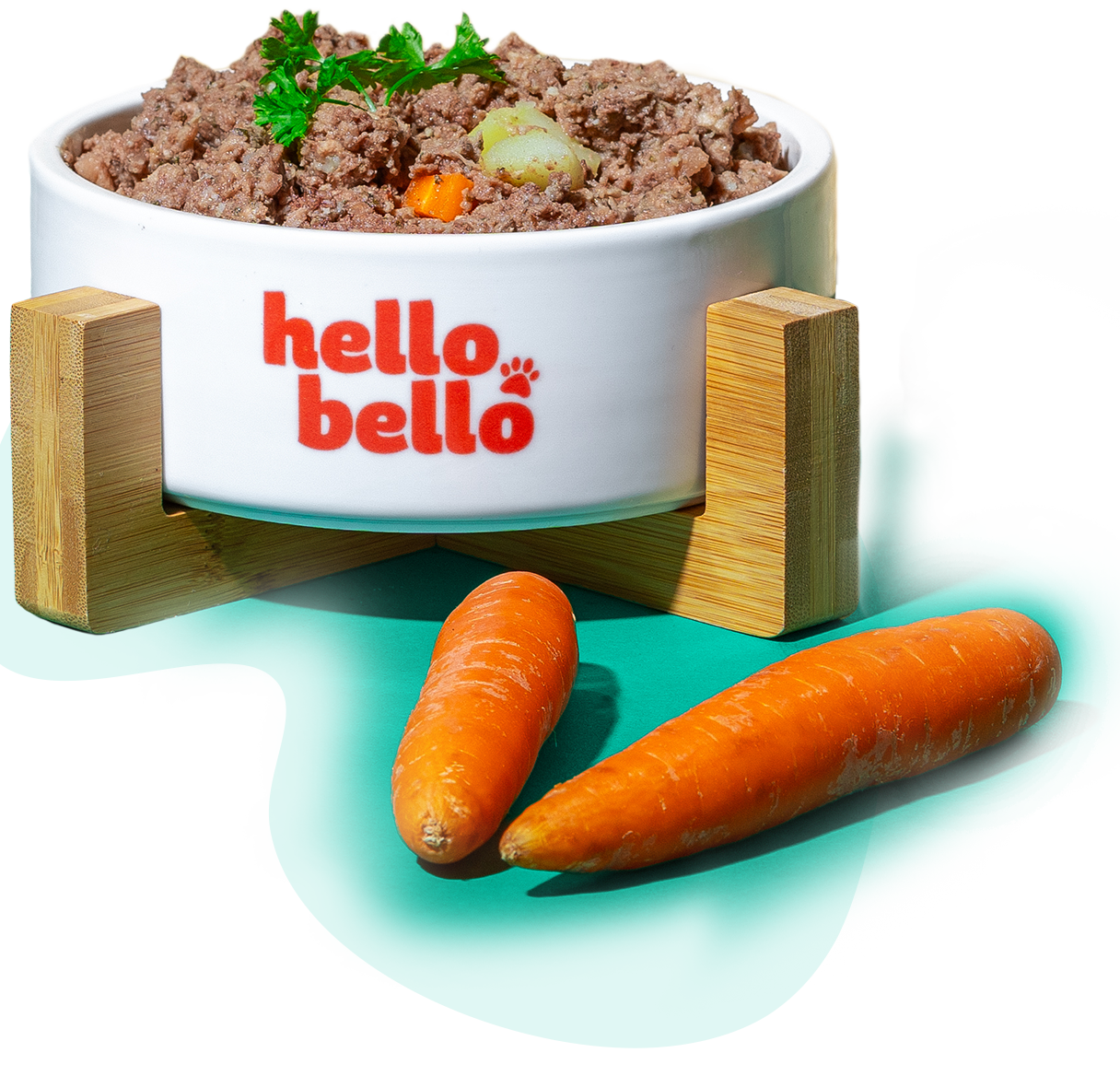
Cooked dog food consists of fresh ingredients that are heated before feeding. Typical ingredients are meat, vegetables, well-tolerated carbohydrate sources, suitable fats, and a balanced nutrient mix. It can be home-cooked or delivered as pre-portioned, nutritionally complete, freshly cooked dog food.
It is important to distinguish: Home-cooked does not automatically mean nutritionally complete. And freshly cooked does not automatically mean raw, BARF, or a gentle diet. Cooked dog food is its own form of feeding. It can be very suitable for everyday use if the recipe, hygiene, and portioning are correct.
Bello's Fact:
Cooking can make ingredients more hygienic and easier for many dogs to digest. At the same time, heating, storage, and incorrect recipes can also lead to nutrient loss. That is why good cooked dog food needs a well-thought-out recipe, not just good ingredients.

Why cooked dog food can make sense for dogs
A dog is not a human, but it is also not a little wolf in the living room. Over thousands of years, it has adapted to living with humans. This also means that dogs can utilize starch better than wolves. Cooked carbohydrate sources such as rice, potatoes, or millet can therefore be very useful for many dogs if they are used correctly.
Cooking can have several practical benefits:
- Proteins and plant fibers are partially broken down, making them easier to access.
- Starch becomes more digestible when heated.
- Germs are reduced, which can be particularly relevant for sensitive dogs, puppies, seniors, or immunocompromised animals.
- The smell and consistency are particularly appetizing to many dogs.
- The ingredients remain recognizable, which gives many dog owners more transparency.
But the biggest advantage is not that a food is "cooked". It is that good ingredients are gently processed and combined in the right amounts.
Cooked dog food studies: What does the research say?
The body of studies on cooked dog food is even younger than that for classic dry food. Nevertheless, there are now several peer-reviewed studies on freshly prepared, human-grade, or gently cooked dog food rations. Digestibility, stool quality, stool volume, microbiome, skin and coat parameters, and individual inflammatory markers are examined particularly frequently.
1. Cooked food can be particularly digestible
Digestibility means: How well can your dog actually absorb the nutrients contained in the food? This is exactly where freshly prepared and gently cooked dog food rations perform well in several studies. This is particularly relevant for dogs with sensitive digestion.
In a study with adult dogs, gently cooked and raw test diets were highly digestible, well tolerated, kept stool quality and blood values within the reference range, and influenced the composition of the gut flora (Algya et al., 2018). Another study on commercial freshly prepared dog food rations showed that the digestibility of dry matter, protein, fat, carbohydrate fraction, and energy was higher in the tested fresh diets than in extruded dry food (Tanprasertsuk et al., 2021). An analysis of six fully cooked human-grade dog foods also found high nutrient and amino acid digestibility. Most essential amino acids were above 85%, some even above 90% (Oba et al., 2020).
Bello's Fact:
If a food is highly digestible, the body has to excrete fewer unused residues. Many dog owners notice this in everyday life through smaller, firmer, or less frequent stools. This alone is not proof of good health, but it is a useful indication of good nutrient utilization.
2. Less stool can be a sign of better nutrient utilization
A topic that no one likes to talk about for long, but which reveals a lot: stool. In a study with human-grade dog foods, dogs produced significantly less stool with the tested human-grade rations than with extruded dry food. At the same time, the rations were highly digestible, stool quality remained stable, and serum chemistry values remained unremarkable (Do et al., 2021).
Simply put: If a dog excretes less, it can mean that more of what ends up in the bowl is actually used. Of course, stool volume also always depends on energy content, fiber content, food quantity, and individual digestion. Nevertheless, the finding is exciting because it shows one thing: The processing and quality of the ration make a difference.
![Collecting dog stool]()
3. Freshly cooked food can change the gut flora
The gut flora is a huge topic in dog nutrition. It influences how nutrients are utilized, how stable the gut reacts, and how well the digestion can cope with changes. Studies show that the form of feeding can measurably change the microbial composition in the stool.
In dogs that received a gently cooked human-grade diet, the fecal microbiota changed significantly compared to dogs that received extruded dry food (Geary et al., 2022). Other studies also report that freshly prepared, human-grade, or gently cooked dog food rations can influence the microbiome and the metabolic products in the stool (Algya et al., 2018; Do et al., 2021).
But it is important: A changed microbiome is not automatically "better". It primarily shows that the gut works differently and other nutrient residues reach the gut bacteria. Which changes are most beneficial in the long term depends on the dog, its health, and the overall recipe.
4. Whole-food diets and inflammatory markers: promising, but no cure
A randomized crossover study with 16 healthy dogs compared a nutritionally complete whole-food diet with extruded dry food. The dogs on the whole-food diet showed a lower TNF-alpha to IL-10 ratio and higher IL-8 production in stimulated leukocytes than under dry food (Jaffey et al., 2022).
Professionally put, this means: The composition and processing of a ration can measurably influence certain immune and inflammatory reactions. At the same time, the classification remains important: The study was small, the dogs were healthy, and the results are no cure. However, they show that nutritionally complete, cooked whole-food nutrition can do more than just provide energy.
5. Gentle cooking can mean fewer heat-induced reaction products
Strongly heating food can produce Maillard reaction products. While they provide browning and roasted flavors, they can also affect the nutritional quality. Lysine, an essential amino acid, is particularly relevant, as it can be partially blocked by intense heat.
A comparative analysis of 41 commercial dog foods examined fresh, dry, wet, freeze-dried, and cold-pressed foods. Certain advanced glycation end products and alpha-dicarbonyl compounds were highest in wet food; for example, glyoxal and methylglyoxal were significantly higher than in freshly prepared dog food (Kocadağlı et al., 2026).
For feeding practice, this means: Not every heated meal is problematic. What matters is how intensively and gently it is processed. Gentle cooking differs significantly from highly intensive industrial processing. That is exactly why we pay attention to temperature, recipe, and nutrient safety with freshly cooked dog food.
Bello's Tip:
Gently cooked does not mean raw or highly processed. Good recipes for freshly cooked dog food use heat purposefully: enough for hygiene and digestibility, but no more than necessary. What remains crucial is that the food is calculated to be nutritionally complete.
6. Skin and coat: interesting, but don't overpromise
Many dog owners switch to cooked dog food because their dog has dull fur, itching, or sensitive skin. Nutrition can play a role here, especially if nutrients, fatty acids, or digestibility are not right. However, research is more cautious than some advertising claims sound.
In a 12-week study with healthy dogs, a mildly cooked human-grade diet did significantly change the gut flora. However, only individual differences were shown in skin and coat parameters, not consistently clear improvements across all measurement points (Geary et al., 2022). This is important because it remains realistic: Good food can support, but skin problems have many possible causes.
If your dog has severe itching, bald patches, recurring ear infections, or inflamed skin, a veterinarian should always take a look. Nutrition is one building block. Diagnosis is the other.
Cooked is not automatically nutritionally complete
Here comes the most important point of the whole article: Cooked dog food is only a good long-term solution if it meets the nutritional requirements. A pot of chicken, rice, and carrot can provide short-term relief, but it is not a complete sole food. The same applies to many homemade recipes from the internet.
The FEDIAF guidelines are considered an important reference in Europe for the composition of complete and complementary pet foods and are based on NRC data as well as other scientific literature (FEDIAF, 2025). The WSAVA also recommends paying attention to complete nutrient supply, appropriate life stage, expertise in recipe development, quality control, and available nutrient analyses when selecting a food (WSAVA, 2021).
Important!
A dog does not just need meat and vegetables. It needs energy, protein, essential fatty acids, calcium, phosphorus, trace elements, vitamins, and an appropriate amount for age, weight, activity, and special needs.
![Woman cooked dog food herself]()
What must be included in cooked dog food?
A good cooked meal for dogs is not made of a random mixture. It follows a clear nutritional logic.
Building block
Why it is important
Typical sources
High-quality protein
For muscles, organs, immune system, and maintenance of body mass.
Meat, fish, egg, suitable animal protein sources
Fat and fatty acids
For energy, skin, coat, and absorption of fat-soluble vitamins.
Oils, animal fats, omega-3 sources
Carbohydrates and fiber
For readily available energy and stable digestion.
Rice, potato, millet, vegetables, fiber
Minerals
For bones, teeth, nerves, muscles, and metabolism.
Calcium, phosphorus, zinc, copper, iodine, selenium in appropriate amounts
Vitamins
For immune system, skin, eyes, cell protection, and many metabolic processes.
Vitamin A, D, E, B vitamins, and other micronutrients
Individual portion size
So that your dog gets neither too much nor too little energy.
Adjustment to weight, age, activity, castration, and health status
One point is often underestimated: the right amount. Studies on life expectancy do not show that cooked food alone lets dogs live longer. However, they show very clearly that energy intake and body condition are important: In Labrador Retrievers, long-term controlled feeding led to longer median lifespan and later onset of chronic diseases (Kealy et al., 2002; Lawler et al., 2008). A large retrospective study with over 50,000 castrated dogs also found that overweight in midlife was associated with shorter lifespan (Salt et al., 2019). That is exactly why individual portioning is so important.
That is exactly why it is not enough to simply combine "good ingredients". A dog can still be underfed with high-quality ingredients if the amounts and nutrient ratios are not correct.
Making cooked dog food yourself: well-intentioned, but demanding
Cooking yourself can make sense if it is done consciously, controlled, and with professional support. Especially with allergies, certain diseases, or very picky dogs, an individually calculated ration can be helpful.
The catch: Many homemade recipes do not meet the nutrient requirements. In a study of 200 recipes for homemade maintenance diets for dogs, most recipes showed nutrient deficiencies (Stockman et al., 2013). The problem is not cooking itself. The problem is the lack of calculation.
Bello's Tip:
If you want to cook for your dog yourself permanently, have the ration calculated by a specialized veterinarian or a qualified nutrition consultant. This is especially important for puppies, seniors, pregnant dogs, and dogs with diseases.
For which dogs can cooked food be particularly interesting?
Cooked dog food can be a good option for many dogs. However, it is especially interesting if your dog reacts sensitively to food or you want more control over ingredients, portions, and digestibility in everyday life.
- Dogs with sensitive digestion, soft stools, or frequent stomach rumbling
- picky dogs that only reluctantly eat dry food
- Dogs with increased moisture requirements or low drinking motivation
- Seniors who accept soft consistencies better
- Dogs with skin and coat issues, where nutrition is a possible building block
- Dog owners who want clear ingredients and individually calculated portions
Nevertheless: If your dog loses weight rapidly, vomits frequently, has blood in the stool, shows chronic diarrhea, appears apathetic, or has pain, food is not the first step. Then your dog should be checked by a veterinarian.
HelloBello: freshly cooked dog food, nutritionally complete and individually tailored
This is exactly where HelloBello comes in. As a manufacturer of freshly cooked dog food, we deal daily with how high-quality ingredients become a nutritionally complete, safe, and everyday-suitable meal for dogs. You want freshly cooked dog food, but without daily calculating, weighing, and uncertainty? Then nutritionally complete, individually tailored HelloBello meals are a safe alternative to spontaneous homemade cooking.
HelloBello meals are cooked from food-grade ingredients, developed by veterinarians, and gently cooked at 90 °C. The recipes are tailored to your dog: breed, age, weight, activity, and special needs are incorporated into the meal plan. The meals come pre-portioned and frozen to your home.
For you, this means: freshly cooked dog food without artificial additives, without bone meal, without fillers, and without sugar. For your dog, this means: a meal that not only looks natural, but was developed as a nutritionally complete daily feeding.
![Freshly cooked dog food delivery]()
How to switch your dog to cooked dog food
Even though cooked dog food can be well tolerated, the switch should happen slowly. The gut needs time to get used to new ingredients, moisture, energy content, and consistency.
Period
Feeding
Day 1-2
25 % new food, 75 % previous food
Day 3-4
50 % new food, 50 % previous food
Day 5-6
75 % new food, 25 % previous food
From Day 7
100 % new food, if your dog tolerates it well
For sensitive dogs, the switch can also take 10 to 14 days. Soft stool in the first days is not automatically a drama. If diarrhea, vomiting, or stomach pain persist, you should pause the switch and have it checked by a veterinarian.
Important!
Please do not permanently mix several complete sole foods together without adjusting the total amount. Otherwise, your dog can get too many calories. With HelloBello, the portion is already calculated for your dog.
FAQ: Frequently Asked Questions About Cooked Dog Food
Is cooked dog food better than dry food?
Studies show benefits in digestibility, stool volume, gut flora, and individual immune and inflammatory markers with freshly prepared or mildly cooked dog food rations. However, the key is whether the food is nutritionally complete, safely produced, and tailored to your dog.
Can I give my dog cooked chicken every day?
Cooked chicken can be well tolerated in the short term, but on its own it is not a complete food. It lacks important nutrients such as calcium, essential fatty acids, trace elements, and vitamins. For long-term feeding, a complete recipe is required.
Is cooked dog food good for dogs with diarrhea?
In the short term, easily digestible cooked meals can relieve the gut. In case of acute diarrhea, blood in the stool, fever, lethargy, vomiting, or symptoms lasting more than 24 to 48 hours, you should contact a veterinarian.
Which is better: raw or cooked?
Raw feeding and cooked food are not the same. Cooked food can have hygiene advantages because heating reduces germs. At the same time, it remains closer to fresh ingredients than highly processed dry food. In both cases, a complete, safe recipe remains important.
What ingredients belong in cooked dog food?
Typical are high-quality protein sources, well-tolerated carbohydrates, vegetables, suitable fats, and a balanced nutrient mix. The exact composition depends on your dog's age, weight, activity, breed, and individual needs.
Why does my dog produce less stool with cooked food?
If a food is very digestible, fewer undigested residues remain. Studies with freshly prepared or human-grade dog food rations show lower stool volumes compared to extruded dry food. This can be an indication of better nutrient utilization, but does not replace a health diagnosis.
Can I cook cooked dog food myself?
Yes, but only long-term with a calculated recipe. Many freely available recipes are not nutritionally complete. Especially for puppies, seniors, sick dogs, or dogs with allergies, the ration should be professionally calculated.
Is freshly cooked dog food healthy?
Yes, freshly cooked dog food can be healthy if it is completely and balanced. Only meat, rice, or vegetables are not enough in the long term. Your dog needs a calculated recipe with appropriate amounts of energy, protein, fat, minerals, trace elements, and vitamins.
What do studies say about cooked dog food?
Studies on cooked dog food show benefits above all in digestibility, stool volume, and changes in gut flora. Individual studies also report differences in immune and inflammatory markers. The important thing is the interpretation: These results speak for the potential of freshly prepared or mildly cooked dog food rations, but do not replace individual veterinary advice.
Conclusion: Cooked dog food is an optimal option if it is nutritionally complete
Cooked dog food is more than a trend. Studies show that freshly prepared and mildly cooked dog food rations can have measurable effects on dogs: high digestibility, less stool, stable stool quality, changes in gut flora, individual immunological effects, and a different processing footprint than highly heated feed.
But the most important finding is: Cooked alone is not enough. A food must be complete, balanced, safely produced, and individually suitable. Then freshly cooked dog food can be a real alternative, especially for dogs with sensitive digestion, picky eating habits, or increased demands on quality and transparency.
If you want freshly cooked dog food, but without the uncertainty of cooking it yourself, HelloBello is made exactly for that: complete meals, developed by veterinarians, pre-portioned, and tailored to your dog.
![Anita Lorber]()
Anita Lorber
Sources:
Algya, K. M., Cross, T.-W. L., Leuck, K. N., Kastner, M. E., Baba, T., Lye, L., de Godoy, M. R. C., & Swanson, K. S. (2018). Apparent total tract macronutrient digestibility, serum chemistry, urinalysis, and fecal characteristics, metabolites and microbiota of adult dogs fed extruded, mildly cooked, and raw diets. Journal of Animal Science, 96(9), 3670-3683. https://doi.org/10.1093/jas/sky235
Do, S., Phungviwatnikul, T., de Godoy, M. R. C., & Swanson, K. S. (2021). Nutrient digestibility and fecal characteristics, microbiota, and metabolites in dogs fed human-grade foods. Journal of Animal Science, 99(2), skab028. https://doi.org/10.1093/jas/skab028
FEDIAF. (2025). Nutritional guidelines for complete and complementary pet food for cats and dogs. European Pet Food Industry Federation.
Geary, E. L., Oba, P. M., Applegate, C. C., Clark, L. V., Fields, C. J., & Swanson, K. S. (2022). Effects of a mildly cooked human-grade dog diet on gene expression, skin and coat health measures, and fecal microbiota of healthy adult dogs. Journal of Animal Science, 100(10), skac265. https://doi.org/10.1093/jas/skac265
Jaffey, J. A., Su, D., Monasky, R., Hanratty, B., Flannery, E., & Horman, M. (2022). Effects of a whole food diet on immune function and inflammatory phenotype in healthy dogs: A randomized, open-labeled, cross-over clinical trial. Frontiers in Veterinary Science, 9, 898056. https://doi.org/10.3389/fvets.2022.898056
Kealy, R. D., Lawler, D. F., Ballam, J. M., Mantz, S. L., Biery, D. N., Greeley, E. H., Lust, G., Segre, M., Smith, G. K., & Stowe, H. D. (2002). Effects of diet restriction on life span and age-related changes in dogs. Journal of the American Veterinary Medical Association, 220(9), 1315-1320. https://doi.org/10.2460/javma.2002.220.1315
Kocadağlı, T., Clarke, C., & Gökmen, V. (2026). A comparative analysis of Maillard-derived alpha-dicarbonyl compounds and advanced glycation end products in fresh, wet, kibble, and freeze-dried dog foods. Journal of Animal Physiology and Animal Nutrition, 110(3), 417-426. https://doi.org/10.1111/jpn.70053
Lawler, D. F., Larson, B. T., Ballam, J. M., Smith, G. K., Biery, D. N., Evans, R. H., Greeley, E. H., Segre, M., Stowe, H. D., & Kealy, R. D. (2008). Diet restriction and ageing in the dog: Major observations over two decades. British Journal of Nutrition, 99(4), 793-805. https://doi.org/10.1017/S0007114507871686
Oba, P. M., Utterback, P. L., Parsons, C. M., & Swanson, K. S. (2020). True nutrient and amino acid digestibility of dog foods made with human-grade ingredients using the precision-fed cecectomized rooster assay. Translational Animal Science, 4(1), 442-451. https://doi.org/10.1093/tas/txz175
Salt, C., Morris, P. J., Wilson, D., Lund, E. M., & German, A. J. (2019). Association between life span and body condition in neutered client-owned dogs. Journal of Veterinary Internal Medicine, 33(1), 89-99. https://doi.org/10.1111/jvim.15367
Stockman, J., Fascetti, A. J., Kass, P. H., & Larsen, J. A. (2013). Evaluation of recipes of home-prepared maintenance diets for dogs. Journal of the American Veterinary Medical Association, 242(11), 1500-1505. https://doi.org/10.2460/javma.242.11.1500
Tanprasertsuk, J., Perry, L. M., Tate, D. E., Honaker, R. W., & Shmalberg, J. (2021). Apparent total tract nutrient digestibility and metabolizable energy estimation in commercial fresh and extruded dry kibble dog foods. Translational Animal Science, 5(3), txab071. https://doi.org/10.1093/tas/txab071
World Small Animal Veterinary Association. (2021). Guidelines on selecting pet foods. WSAVA Global Nutrition Committee.
A dog is not a human, but it is also not a little wolf in the living room. Over thousands of years, it has adapted to living with humans. This also means that dogs can utilize starch better than wolves. Cooked carbohydrate sources such as rice, potatoes, or millet can therefore be very useful for many dogs if they are used correctly.
Cooking can have several practical benefits:
- Proteins and plant fibers are partially broken down, making them easier to access.
- Starch becomes more digestible when heated.
- Germs are reduced, which can be particularly relevant for sensitive dogs, puppies, seniors, or immunocompromised animals.
- The smell and consistency are particularly appetizing to many dogs.
- The ingredients remain recognizable, which gives many dog owners more transparency.
But the biggest advantage is not that a food is "cooked". It is that good ingredients are gently processed and combined in the right amounts.
The body of studies on cooked dog food is even younger than that for classic dry food. Nevertheless, there are now several peer-reviewed studies on freshly prepared, human-grade, or gently cooked dog food rations. Digestibility, stool quality, stool volume, microbiome, skin and coat parameters, and individual inflammatory markers are examined particularly frequently.
Digestibility means: How well can your dog actually absorb the nutrients contained in the food? This is exactly where freshly prepared and gently cooked dog food rations perform well in several studies. This is particularly relevant for dogs with sensitive digestion.
In a study with adult dogs, gently cooked and raw test diets were highly digestible, well tolerated, kept stool quality and blood values within the reference range, and influenced the composition of the gut flora (Algya et al., 2018). Another study on commercial freshly prepared dog food rations showed that the digestibility of dry matter, protein, fat, carbohydrate fraction, and energy was higher in the tested fresh diets than in extruded dry food (Tanprasertsuk et al., 2021). An analysis of six fully cooked human-grade dog foods also found high nutrient and amino acid digestibility. Most essential amino acids were above 85%, some even above 90% (Oba et al., 2020).
Bello's Fact:
If a food is highly digestible, the body has to excrete fewer unused residues. Many dog owners notice this in everyday life through smaller, firmer, or less frequent stools. This alone is not proof of good health, but it is a useful indication of good nutrient utilization.
A topic that no one likes to talk about for long, but which reveals a lot: stool. In a study with human-grade dog foods, dogs produced significantly less stool with the tested human-grade rations than with extruded dry food. At the same time, the rations were highly digestible, stool quality remained stable, and serum chemistry values remained unremarkable (Do et al., 2021).
Simply put: If a dog excretes less, it can mean that more of what ends up in the bowl is actually used. Of course, stool volume also always depends on energy content, fiber content, food quantity, and individual digestion. Nevertheless, the finding is exciting because it shows one thing: The processing and quality of the ration make a difference.

The gut flora is a huge topic in dog nutrition. It influences how nutrients are utilized, how stable the gut reacts, and how well the digestion can cope with changes. Studies show that the form of feeding can measurably change the microbial composition in the stool.
In dogs that received a gently cooked human-grade diet, the fecal microbiota changed significantly compared to dogs that received extruded dry food (Geary et al., 2022). Other studies also report that freshly prepared, human-grade, or gently cooked dog food rations can influence the microbiome and the metabolic products in the stool (Algya et al., 2018; Do et al., 2021).
But it is important: A changed microbiome is not automatically "better". It primarily shows that the gut works differently and other nutrient residues reach the gut bacteria. Which changes are most beneficial in the long term depends on the dog, its health, and the overall recipe.
A randomized crossover study with 16 healthy dogs compared a nutritionally complete whole-food diet with extruded dry food. The dogs on the whole-food diet showed a lower TNF-alpha to IL-10 ratio and higher IL-8 production in stimulated leukocytes than under dry food (Jaffey et al., 2022).
Professionally put, this means: The composition and processing of a ration can measurably influence certain immune and inflammatory reactions. At the same time, the classification remains important: The study was small, the dogs were healthy, and the results are no cure. However, they show that nutritionally complete, cooked whole-food nutrition can do more than just provide energy.
Strongly heating food can produce Maillard reaction products. While they provide browning and roasted flavors, they can also affect the nutritional quality. Lysine, an essential amino acid, is particularly relevant, as it can be partially blocked by intense heat.
A comparative analysis of 41 commercial dog foods examined fresh, dry, wet, freeze-dried, and cold-pressed foods. Certain advanced glycation end products and alpha-dicarbonyl compounds were highest in wet food; for example, glyoxal and methylglyoxal were significantly higher than in freshly prepared dog food (Kocadağlı et al., 2026).
For feeding practice, this means: Not every heated meal is problematic. What matters is how intensively and gently it is processed. Gentle cooking differs significantly from highly intensive industrial processing. That is exactly why we pay attention to temperature, recipe, and nutrient safety with freshly cooked dog food.
Bello's Tip:
Gently cooked does not mean raw or highly processed. Good recipes for freshly cooked dog food use heat purposefully: enough for hygiene and digestibility, but no more than necessary. What remains crucial is that the food is calculated to be nutritionally complete.
Many dog owners switch to cooked dog food because their dog has dull fur, itching, or sensitive skin. Nutrition can play a role here, especially if nutrients, fatty acids, or digestibility are not right. However, research is more cautious than some advertising claims sound.
In a 12-week study with healthy dogs, a mildly cooked human-grade diet did significantly change the gut flora. However, only individual differences were shown in skin and coat parameters, not consistently clear improvements across all measurement points (Geary et al., 2022). This is important because it remains realistic: Good food can support, but skin problems have many possible causes.
If your dog has severe itching, bald patches, recurring ear infections, or inflamed skin, a veterinarian should always take a look. Nutrition is one building block. Diagnosis is the other.
Here comes the most important point of the whole article: Cooked dog food is only a good long-term solution if it meets the nutritional requirements. A pot of chicken, rice, and carrot can provide short-term relief, but it is not a complete sole food. The same applies to many homemade recipes from the internet.
The FEDIAF guidelines are considered an important reference in Europe for the composition of complete and complementary pet foods and are based on NRC data as well as other scientific literature (FEDIAF, 2025). The WSAVA also recommends paying attention to complete nutrient supply, appropriate life stage, expertise in recipe development, quality control, and available nutrient analyses when selecting a food (WSAVA, 2021).
Important!
A dog does not just need meat and vegetables. It needs energy, protein, essential fatty acids, calcium, phosphorus, trace elements, vitamins, and an appropriate amount for age, weight, activity, and special needs.

A good cooked meal for dogs is not made of a random mixture. It follows a clear nutritional logic.
Building block |
Why it is important |
Typical sources |
High-quality protein |
For muscles, organs, immune system, and maintenance of body mass. |
Meat, fish, egg, suitable animal protein sources |
Fat and fatty acids |
For energy, skin, coat, and absorption of fat-soluble vitamins. |
Oils, animal fats, omega-3 sources |
Carbohydrates and fiber |
For readily available energy and stable digestion. |
Rice, potato, millet, vegetables, fiber |
Minerals |
For bones, teeth, nerves, muscles, and metabolism. |
Calcium, phosphorus, zinc, copper, iodine, selenium in appropriate amounts |
Vitamins |
For immune system, skin, eyes, cell protection, and many metabolic processes. |
Vitamin A, D, E, B vitamins, and other micronutrients |
Individual portion size |
So that your dog gets neither too much nor too little energy. |
Adjustment to weight, age, activity, castration, and health status |
One point is often underestimated: the right amount. Studies on life expectancy do not show that cooked food alone lets dogs live longer. However, they show very clearly that energy intake and body condition are important: In Labrador Retrievers, long-term controlled feeding led to longer median lifespan and later onset of chronic diseases (Kealy et al., 2002; Lawler et al., 2008). A large retrospective study with over 50,000 castrated dogs also found that overweight in midlife was associated with shorter lifespan (Salt et al., 2019). That is exactly why individual portioning is so important.
That is exactly why it is not enough to simply combine "good ingredients". A dog can still be underfed with high-quality ingredients if the amounts and nutrient ratios are not correct.
Cooking yourself can make sense if it is done consciously, controlled, and with professional support. Especially with allergies, certain diseases, or very picky dogs, an individually calculated ration can be helpful.
The catch: Many homemade recipes do not meet the nutrient requirements. In a study of 200 recipes for homemade maintenance diets for dogs, most recipes showed nutrient deficiencies (Stockman et al., 2013). The problem is not cooking itself. The problem is the lack of calculation.
Bello's Tip:
If you want to cook for your dog yourself permanently, have the ration calculated by a specialized veterinarian or a qualified nutrition consultant. This is especially important for puppies, seniors, pregnant dogs, and dogs with diseases.
Cooked dog food can be a good option for many dogs. However, it is especially interesting if your dog reacts sensitively to food or you want more control over ingredients, portions, and digestibility in everyday life.
- Dogs with sensitive digestion, soft stools, or frequent stomach rumbling
- picky dogs that only reluctantly eat dry food
- Dogs with increased moisture requirements or low drinking motivation
- Seniors who accept soft consistencies better
- Dogs with skin and coat issues, where nutrition is a possible building block
- Dog owners who want clear ingredients and individually calculated portions
Nevertheless: If your dog loses weight rapidly, vomits frequently, has blood in the stool, shows chronic diarrhea, appears apathetic, or has pain, food is not the first step. Then your dog should be checked by a veterinarian.
This is exactly where HelloBello comes in. As a manufacturer of freshly cooked dog food, we deal daily with how high-quality ingredients become a nutritionally complete, safe, and everyday-suitable meal for dogs. You want freshly cooked dog food, but without daily calculating, weighing, and uncertainty? Then nutritionally complete, individually tailored HelloBello meals are a safe alternative to spontaneous homemade cooking.
HelloBello meals are cooked from food-grade ingredients, developed by veterinarians, and gently cooked at 90 °C. The recipes are tailored to your dog: breed, age, weight, activity, and special needs are incorporated into the meal plan. The meals come pre-portioned and frozen to your home.
For you, this means: freshly cooked dog food without artificial additives, without bone meal, without fillers, and without sugar. For your dog, this means: a meal that not only looks natural, but was developed as a nutritionally complete daily feeding.

Even though cooked dog food can be well tolerated, the switch should happen slowly. The gut needs time to get used to new ingredients, moisture, energy content, and consistency.
Period |
Feeding |
Day 1-2 |
25 % new food, 75 % previous food |
Day 3-4 |
50 % new food, 50 % previous food |
Day 5-6 |
75 % new food, 25 % previous food |
From Day 7 |
100 % new food, if your dog tolerates it well |
For sensitive dogs, the switch can also take 10 to 14 days. Soft stool in the first days is not automatically a drama. If diarrhea, vomiting, or stomach pain persist, you should pause the switch and have it checked by a veterinarian.
Important!
Please do not permanently mix several complete sole foods together without adjusting the total amount. Otherwise, your dog can get too many calories. With HelloBello, the portion is already calculated for your dog.
Is cooked dog food better than dry food?
Studies show benefits in digestibility, stool volume, gut flora, and individual immune and inflammatory markers with freshly prepared or mildly cooked dog food rations. However, the key is whether the food is nutritionally complete, safely produced, and tailored to your dog.
Can I give my dog cooked chicken every day?
Cooked chicken can be well tolerated in the short term, but on its own it is not a complete food. It lacks important nutrients such as calcium, essential fatty acids, trace elements, and vitamins. For long-term feeding, a complete recipe is required.
Is cooked dog food good for dogs with diarrhea?
In the short term, easily digestible cooked meals can relieve the gut. In case of acute diarrhea, blood in the stool, fever, lethargy, vomiting, or symptoms lasting more than 24 to 48 hours, you should contact a veterinarian.
Which is better: raw or cooked?
Raw feeding and cooked food are not the same. Cooked food can have hygiene advantages because heating reduces germs. At the same time, it remains closer to fresh ingredients than highly processed dry food. In both cases, a complete, safe recipe remains important.
What ingredients belong in cooked dog food?
Typical are high-quality protein sources, well-tolerated carbohydrates, vegetables, suitable fats, and a balanced nutrient mix. The exact composition depends on your dog's age, weight, activity, breed, and individual needs.
Why does my dog produce less stool with cooked food?
If a food is very digestible, fewer undigested residues remain. Studies with freshly prepared or human-grade dog food rations show lower stool volumes compared to extruded dry food. This can be an indication of better nutrient utilization, but does not replace a health diagnosis.
Can I cook cooked dog food myself?
Yes, but only long-term with a calculated recipe. Many freely available recipes are not nutritionally complete. Especially for puppies, seniors, sick dogs, or dogs with allergies, the ration should be professionally calculated.
Is freshly cooked dog food healthy?
Yes, freshly cooked dog food can be healthy if it is completely and balanced. Only meat, rice, or vegetables are not enough in the long term. Your dog needs a calculated recipe with appropriate amounts of energy, protein, fat, minerals, trace elements, and vitamins.
What do studies say about cooked dog food?
Studies on cooked dog food show benefits above all in digestibility, stool volume, and changes in gut flora. Individual studies also report differences in immune and inflammatory markers. The important thing is the interpretation: These results speak for the potential of freshly prepared or mildly cooked dog food rations, but do not replace individual veterinary advice.
Cooked dog food is more than a trend. Studies show that freshly prepared and mildly cooked dog food rations can have measurable effects on dogs: high digestibility, less stool, stable stool quality, changes in gut flora, individual immunological effects, and a different processing footprint than highly heated feed.
But the most important finding is: Cooked alone is not enough. A food must be complete, balanced, safely produced, and individually suitable. Then freshly cooked dog food can be a real alternative, especially for dogs with sensitive digestion, picky eating habits, or increased demands on quality and transparency.
If you want freshly cooked dog food, but without the uncertainty of cooking it yourself, HelloBello is made exactly for that: complete meals, developed by veterinarians, pre-portioned, and tailored to your dog.

Anita Lorber
Sources:
Algya, K. M., Cross, T.-W. L., Leuck, K. N., Kastner, M. E., Baba, T., Lye, L., de Godoy, M. R. C., & Swanson, K. S. (2018). Apparent total tract macronutrient digestibility, serum chemistry, urinalysis, and fecal characteristics, metabolites and microbiota of adult dogs fed extruded, mildly cooked, and raw diets. Journal of Animal Science, 96(9), 3670-3683. https://doi.org/10.1093/jas/sky235
Do, S., Phungviwatnikul, T., de Godoy, M. R. C., & Swanson, K. S. (2021). Nutrient digestibility and fecal characteristics, microbiota, and metabolites in dogs fed human-grade foods. Journal of Animal Science, 99(2), skab028. https://doi.org/10.1093/jas/skab028
FEDIAF. (2025). Nutritional guidelines for complete and complementary pet food for cats and dogs. European Pet Food Industry Federation.
Geary, E. L., Oba, P. M., Applegate, C. C., Clark, L. V., Fields, C. J., & Swanson, K. S. (2022). Effects of a mildly cooked human-grade dog diet on gene expression, skin and coat health measures, and fecal microbiota of healthy adult dogs. Journal of Animal Science, 100(10), skac265. https://doi.org/10.1093/jas/skac265
Jaffey, J. A., Su, D., Monasky, R., Hanratty, B., Flannery, E., & Horman, M. (2022). Effects of a whole food diet on immune function and inflammatory phenotype in healthy dogs: A randomized, open-labeled, cross-over clinical trial. Frontiers in Veterinary Science, 9, 898056. https://doi.org/10.3389/fvets.2022.898056
Kealy, R. D., Lawler, D. F., Ballam, J. M., Mantz, S. L., Biery, D. N., Greeley, E. H., Lust, G., Segre, M., Smith, G. K., & Stowe, H. D. (2002). Effects of diet restriction on life span and age-related changes in dogs. Journal of the American Veterinary Medical Association, 220(9), 1315-1320. https://doi.org/10.2460/javma.2002.220.1315
Kocadağlı, T., Clarke, C., & Gökmen, V. (2026). A comparative analysis of Maillard-derived alpha-dicarbonyl compounds and advanced glycation end products in fresh, wet, kibble, and freeze-dried dog foods. Journal of Animal Physiology and Animal Nutrition, 110(3), 417-426. https://doi.org/10.1111/jpn.70053
Lawler, D. F., Larson, B. T., Ballam, J. M., Smith, G. K., Biery, D. N., Evans, R. H., Greeley, E. H., Segre, M., Stowe, H. D., & Kealy, R. D. (2008). Diet restriction and ageing in the dog: Major observations over two decades. British Journal of Nutrition, 99(4), 793-805. https://doi.org/10.1017/S0007114507871686
Oba, P. M., Utterback, P. L., Parsons, C. M., & Swanson, K. S. (2020). True nutrient and amino acid digestibility of dog foods made with human-grade ingredients using the precision-fed cecectomized rooster assay. Translational Animal Science, 4(1), 442-451. https://doi.org/10.1093/tas/txz175
Salt, C., Morris, P. J., Wilson, D., Lund, E. M., & German, A. J. (2019). Association between life span and body condition in neutered client-owned dogs. Journal of Veterinary Internal Medicine, 33(1), 89-99. https://doi.org/10.1111/jvim.15367
Stockman, J., Fascetti, A. J., Kass, P. H., & Larsen, J. A. (2013). Evaluation of recipes of home-prepared maintenance diets for dogs. Journal of the American Veterinary Medical Association, 242(11), 1500-1505. https://doi.org/10.2460/javma.242.11.1500
Tanprasertsuk, J., Perry, L. M., Tate, D. E., Honaker, R. W., & Shmalberg, J. (2021). Apparent total tract nutrient digestibility and metabolizable energy estimation in commercial fresh and extruded dry kibble dog foods. Translational Animal Science, 5(3), txab071. https://doi.org/10.1093/tas/txab071
World Small Animal Veterinary Association. (2021). Guidelines on selecting pet foods. WSAVA Global Nutrition Committee.
Ready to give your dog a healthier and longer life?
Order gluten-free dog food now and 30 % save!
Order now


